Employee onboarding involves much more than introducing a new employee to the team.
A new employee needs to understand company policies, leave rules, benefits, working arrangements, expense procedures, IT guidelines, security requirements, and many other internal processes.
The information is usually available.
The challenge is finding the right information at the moment an employee needs it.
A new employee may spend time searching through an employee handbook, HR portal, internal documents, emails, or shared folders just to find an answer to a simple question.
HR teams face a similar challenge from the other side. They may repeatedly answer questions that are already covered in company documentation.
So, how can RAG AI create a smarter employee onboarding experience?
The answer is by giving employees a conversational way to access the company's existing knowledge.
A RAG AI Employee Onboarding Assistant can help employees find information about company policies, benefits, leave, expenses, working arrangements, IT guidelines, and other onboarding-related topics using natural-language questions.
With Ragfish, organizations can turn their existing HR and onboarding documents into an AI-powered knowledge assistant that helps employees find relevant information without constantly searching through documents or depending on HR for every routine question.
Quick Answer: How Can RAG AI Help With Employee Onboarding?
RAG AI can simplify employee onboarding by making company information easier to discover and access.
Instead of asking employees to search through multiple documents, an onboarding assistant can allow them to ask questions such as:
What is the company's leave policy?
How do I apply for time off?
What is the work-from-home policy?
How do I claim a business expense?
What benefits are available to employees?
How do I enroll in medical insurance?
What are the company's working hours?
Where can I find the holiday calendar?
What are the IT security requirements?
Who should I contact for a specific HR request?
The RAG AI assistant retrieves relevant information from the organization's available knowledge and presents it through a conversational experience.
The goal isn't to replace HR.
The goal is to make existing HR knowledge easier for employees to access and use.
What Is a RAG AI Employee Onboarding Assistant?
A RAG AI Employee Onboarding Assistant is an AI-powered assistant that allows employees to interact with their organization's onboarding and HR knowledge using natural language.
Traditional onboarding often depends on employees reading handbooks, searching HR portals, opening policy documents, and contacting HR when they cannot find an answer.
A RAG AI assistant changes the way employees interact with this information.
"Which document contains the leave policy?"
"How many days of leave can I take?"
The assistant can retrieve relevant information from the organization's knowledge and provide a response based on the available company documentation.
For organizations using Ragfish, the assistant can be built around their own HR and onboarding information, including employee handbooks, HR policies, benefits documentation, IT guidelines, travel policies, expense procedures, and other internal resources.
Why Is Employee Onboarding Still So Difficult?
Employee onboarding can involve a large amount of information.
A new employee may need to understand:
Company policies
Leave procedures
Benefits
Working hours
Remote-work guidelines
Expense procedures
Travel policies
IT requirements
Security guidelines
Workplace expectations
Internal processes
The challenge is that this information may not exist in one place.
One answer might be in the employee handbook.
Another could be in an HR policy.
Benefits information may be stored in a separate document.
IT requirements may be maintained by another department.
The employee may know that the information exists, but still spend time figuring out where to find it.
This can make the onboarding experience more complicated than it needs to be.
For HR teams, the same situation can create repetitive work because employees frequently ask questions about information that has already been documented.
The Real Problem Isn't the Lack of HR Information
Organizations spend significant time creating employee documentation.
They create IT guidelines.
They publish travel and expense procedures.
They maintain holiday calendars.
The information is valuable.
But documentation only helps when employees can find and understand it.
A 50-page employee handbook may contain the answer to an employee's question, but asking someone to search through 50 pages isn't always the most efficient experience.
This is where RAG AI can make a difference.
Instead of asking employees to understand the organization's document structure first, the AI assistant allows them to start with the question they already have.
The employee asks. The AI retrieves the relevant company knowledge.
How Does a RAG AI Employee Onboarding Assistant Work?
The process can be thought of in four simple stages.
1. Bring Your Employee Knowledge Together
The first step is identifying the information employees need during onboarding.
Employee handbooks
HR policies
Leave policies
Benefits information
Travel policies
Expense guidelines
IT documentation
Security guidelines
Work-from-home policies
Holiday information
Internal procedures
These documents become the knowledge foundation for the onboarding assistant.
2. Make the Knowledge Searchable Through RAG AI
Once the relevant information is available to the assistant, employees don't need to rely entirely on manual document searches.
RAG AI retrieves information relevant to the employee's question from the organization's knowledge sources.
3. Ask Questions in Natural Language
Employees can interact with the assistant as they would with a colleague.
"How do I apply for leave?"
"What is the process for claiming travel expenses?"
They don't need to know the exact name of the document containing the answer.
4. Get Answers From Company Knowledge
The assistant uses relevant organizational information to provide a response.
This changes the onboarding experience from:
Finding documents → Reading documents → Finding answers
Asking questions → Finding relevant knowledge → Getting answers
The focus becomes less about navigating documentation and more about accessing information.
What Can You Ask a RAG AI Employee Onboarding Assistant?
One of the biggest advantages of an AI onboarding assistant is that employees can ask questions based on what they need at that moment.
Here are some practical examples.
Understand Leave Policies
Instead of searching through HR documentation:
"How do I apply for leave?"
The employee can ask the assistant directly and find the relevant documented procedure.
Check Work-From-Home Rules
An employee who wants to understand remote-working arrangements can ask:
"What is the company's work-from-home policy?"
This provides a simple way to access the relevant workplace guidelines.
When an employee needs to submit a business expense:
"How do I claim a travel expense?"
The assistant can help locate the applicable expense procedure.
Learn About Employee Benefits
"What employee benefits are available to me?"
The assistant can retrieve relevant information from the organization's benefits documentation.
Understand Insurance Information
Instead of searching through benefits documents:
"How do I enroll in medical insurance?"
The employee can ask the question directly.
A straightforward onboarding question could be:
"What are the company's working hours?"
The assistant can provide the relevant documented information.
Understand IT Requirements
"What are the company's laptop and security guidelines?"
This can help them find the relevant IT information without searching multiple documents.
"Where can I find the company holiday calendar?"
The assistant can help them locate the relevant information.
What Employee Onboarding Information Can RAG AI Understand?
The quality of an AI onboarding assistant depends on the information available to it.
A useful onboarding knowledge base can include several categories.
Central information about company policies, employee expectations, workplace practices, and general onboarding information.
Documents covering employee-related rules and procedures.
Information about leave types, eligibility, application processes, and related procedures.
Information about employee benefits and available programs.
Guidelines for employees travelling for business purposes.
Information about submitting and managing business expenses.
Technology usage, device requirements, access procedures, and other IT-related information.
Information about company security practices and employee responsibilities.
Documented information about remote and hybrid working arrangements.
Information about company holidays and scheduled days off.
Standard Operating Procedures
Internal procedures employees may need to understand as they begin working.
The goal is to bring relevant employee knowledge together so the assistant can retrieve the right information when employees ask questions.
What Are the Benefits of Using RAG AI for Employee Onboarding?
RAG AI isn't valuable simply because it adds AI to onboarding.
The real value comes from making company knowledge easier to access.
Faster Information Discovery
Employees spend less time searching through documents to locate answers to routine questions.
Self-Service Employee Support
Employees can find information independently instead of contacting HR for every basic question.
Reduced Repetitive HR Questions
HR teams can reduce the amount of time spent repeatedly answering questions that are already covered in company documentation.
Better Use of Existing Knowledge
Organizations can make their existing handbooks, policies, and internal documentation more useful by making them conversational.
Easier Onboarding Experience
New employees can start with their question instead of first learning how the organization's documentation is organized.
Consistent Access to Information
Employees can access information from a common knowledge source rather than relying only on informal explanations from different people.
Support for Growing Organizations
As employee numbers increase, an AI assistant can provide an additional layer of scalable employee support.
How to Introduce RAG AI Into Your Employee Onboarding Process
Introducing RAG AI doesn't require replacing your existing HR processes.
A practical approach is to start with the information employees ask about most often.
Step 1: Identify Common Employee Questions
Look at the questions HR teams frequently receive from new employees.
How do I apply for leave?
What benefits do I receive?
How do I submit expenses?
What are the working hours?
What is the work-from-home policy?
How do I access company resources?
These questions can help identify where an AI assistant can provide immediate value.
Step 2: Identify the Documents Behind Those Answers
Determine which company documents contain the official information.
These may include the employee handbook, HR policies, benefits guides, IT documentation, and internal procedures.
Step 3: Build the Employee Knowledge Base
Make the relevant information available to the RAG AI assistant.
The goal is to create a reliable knowledge foundation based on the organization's own information.
Step 4: Define Employee Access
Not every employee should necessarily have access to every internal document.
Access should be configured according to the organization's requirements and information-security policies.
Step 5: Start With High-Value Questions
Rather than attempting to cover every possible HR scenario immediately, start with recurring questions that consume HR time or create onboarding friction.
Step 6: Keep the Knowledge Updated
When HR updates a policy or replaces an old document, the knowledge used by the assistant should also be updated.
This helps ensure employees receive information based on the organization's current documentation.
Best Practices for Using RAG AI in Employee Onboarding
RAG AI can make onboarding easier, but organizations should still establish good processes around its use.
Keep HR Information Current
Old policies can lead to confusion.
Make sure the documents used by the assistant reflect current company rules.
Use Approved Company Sources
The assistant should rely on trusted organizational information for company-specific answers.
Control Access to Internal Information
Employee and HR information can be sensitive, so appropriate access controls are important.
Start With Clear Use Cases
Focus initially on common onboarding questions rather than trying to solve every HR requirement at once.
AI can handle routine information discovery, but employees should still be able to reach HR when they need clarification, guidance, or human support.
Review Important Information
For sensitive HR matters, employees should be encouraged to verify important decisions through the appropriate HR process.
As employees begin using the assistant, organizations can identify additional areas where RAG AI can support employee knowledge and self-service.
Who Can Benefit From a RAG AI Employee Onboarding Assistant?
A RAG AI onboarding assistant can be particularly useful for organizations that manage large amounts of internal employee information.
HR teams
People operations teams
Employee experience teams
Large enterprises
Technology companies
Manufacturing organizations
Healthcare organizations
Financial services companies
Retail organizations
BPO and shared-service organizations
Consulting companies
Fast-growing startups
It can be especially useful when an organization has frequent hiring, multiple HR policies, distributed employees, or a high volume of repetitive employee questions.
How Ragfish Helps Build a RAG AI Employee Onboarding Assistant
Ragfish provides a way for organizations to turn their existing HR and onboarding knowledge into an AI-powered assistant.
Instead of creating a separate knowledge system for every employee question, organizations can make their existing documentation available through a conversational AI experience.
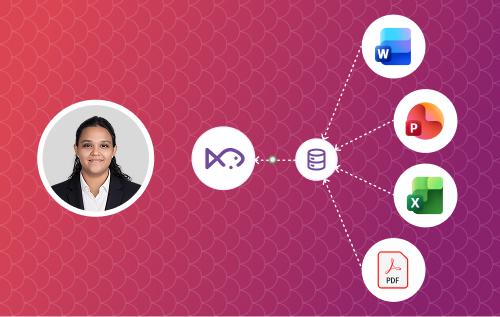
The workflow can be as simple as:
Your HR & Onboarding Documents
RAG AI Employee Onboarding Assistant
Relevant Company Knowledge
The assistant can be built around the organization's own employee information, allowing employees to interact with company knowledge rather than relying on generic AI answers.
Why Use Your Own Company Knowledge With RAG AI?
Generic AI can answer general questions about employment.
But employees usually need answers specific to their organization.
For example, an employee isn't asking:
"What is a work-from-home policy?"
"What is our company's work-from-home policy?"
"What is an employee notice period?"
"What is my company's notice period?"
"How do expense claims generally work?"
"How does our company handle expense claims?"
The answers to these questions exist inside the organization's own documents.
This is why RAG AI is particularly useful for employee onboarding.
It connects the conversational AI experience to the organization's knowledge.
The Future of Employee Onboarding Is More Conversational
Employee onboarding has traditionally relied on handbooks, HR portals, orientation sessions, emails, documents, and direct communication with HR.
These methods still have value.
But the way employees expect to access information is changing.
People are increasingly comfortable asking questions instead of navigating through large amounts of information.
RAG AI brings that interaction model into employee onboarding.
"Which HR document explains the leave process?"
"How do I apply for leave?"
Instead of searching through a benefits document:
"Where is the medical insurance information?"
"How do I enroll in medical insurance?"
Instead of trying to determine which department can answer a question, they can start with the AI onboarding assistant.
This creates a simpler connection between employees and organizational knowledge.
Conclusion: How Can RAG AI Create a Smarter Employee Onboarding Experience?
So, how can RAG AI create a smarter employee onboarding experience?
It starts with making the information employees already need easier to access.
A RAG AI Employee Onboarding Assistant can help employees search company policies, understand onboarding procedures, discover benefits information, find workplace guidelines, and answer routine questions using natural language.
The opportunity isn't simply to automate HR.
It's to make organizational knowledge more accessible.
Employees spend less time searching for information.
HR teams can spend less time answering repetitive questions.
Organizations can make better use of the knowledge they have already created.
And as companies grow, RAG AI can provide a scalable way for employees to interact with company information.
With Ragfish, organizations can turn their existing HR and onboarding documents into an intelligent knowledge experience and give employees a more convenient way to find the information they need.
Ready to Make Employee Onboarding More Intelligent?
Build a RAG AI Employee Onboarding Assistant with Ragfish and give your employees a conversational way to access company knowledge.
Turn your HR documents into an AI-powered employee experience with Ragfish.