Customer feedback is one of the most valuable sources of information for any business.
Customers constantly share what they like, what frustrates them, what they want improved, and why they choose one product or service over another.
The information is there.
The challenge is turning thousands of individual comments, reviews, survey responses, support conversations, and feedback records into meaningful insights.
A customer may leave a review. Another may respond to a survey. Someone else may mention an issue in a support conversation. Product teams may collect feedback from different channels. Marketing teams may have research reports stored separately.
Individually, each piece of feedback tells a small story.
Together, they can reveal important patterns about customers.
So, how can businesses get smarter customer insights?
The answer is by giving teams a conversational way to search, analyze, and understand the customer information they already have.
A RAG AI Customer Feedback & Research Assistant can help teams analyze customer feedback, identify recurring themes, understand customer sentiment, compare feedback, discover product issues, and answer research questions using natural language.
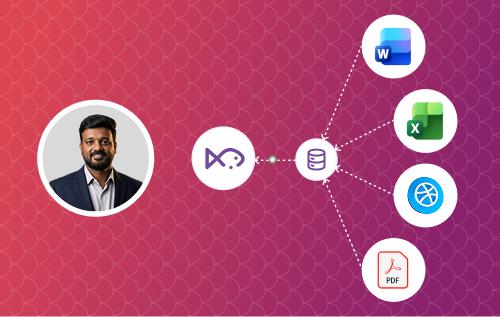
With Ragfish, organizations can turn their existing customer feedback and research data into an AI-powered knowledge assistant that helps teams move from scattered feedback to actionable customer insights.
Quick Answer: How Can RAG AI Help With Customer Feedback and Research?
RAG AI can simplify customer research by making large amounts of customer information easier to search and understand.
Instead of manually reviewing hundreds or thousands of feedback records, teams can ask questions such as:
What are customers saying about our product?
What are the most common complaints?
Which features do customers like the most?
What issues are mentioned repeatedly?
What are customers requesting?
How do customers feel about the latest product update?
What are the main reasons for negative feedback?
What improvements are customers asking for?
Which customer segment has the most complaints?
What trends are appearing in recent feedback?
The AI assistant can search the organization's available customer knowledge and provide relevant insights based on the information available to it.
The goal isn't simply to collect more feedback.
The goal is to make the feedback you already have easier to understand and act on.
What Is a RAG AI Customer Feedback & Research Assistant?
A RAG AI Customer Feedback & Research Assistant is an AI-powered interface that allows teams to interact with customer feedback and research information using natural-language questions.
Traditional customer research often requires teams to collect feedback from different sources, organize it, filter it, read individual responses, and manually identify patterns.
A RAG AI assistant changes that interaction.
"Where can I find customer feedback about our checkout process?"
A team member can simply ask:
"What are customers saying about the checkout experience?"
The assistant can retrieve relevant customer information and help surface the patterns within it.
For organizations using Ragfish, the assistant can be built around their own customer feedback and research knowledge, including surveys, reviews, support conversations, product feedback, interview notes, research reports, and other customer-related information.
Why Is Customer Feedback Analysis Still So Manual?
Businesses collect customer feedback through many different channels.
Customers may provide feedback through:
Surveys
Product reviews
Support tickets
Customer interviews
Feedback forms
Social media
Emails
App reviews
Product research
Customer success conversations
The problem is that feedback doesn't always arrive in one consistent format.
One customer may write a detailed paragraph.
Another may provide a short review.
Someone else may submit a survey response.
A support team may record a customer complaint.
A product manager may capture feedback during an interview.
All of this information can be valuable.
But manually reviewing it takes time.
As the volume of customer feedback increases, teams may struggle to identify which issues matter most and which patterns appear repeatedly.
This creates a familiar challenge:
More customer feedback means more information to analyze.
The Real Problem Isn't the Lack of Customer Feedback
Most businesses don't have a shortage of customer opinions.
Customers are constantly providing valuable information about:
Product experiences
Service quality
Pricing
Features
Usability
Customer support
Delivery
Performance
Problems
Expectations
Future requirements
The challenge is turning these individual responses into a clear understanding of what customers actually want.
A product team may have thousands of reviews but still struggle to answer:
"What is the biggest issue customers are facing?"
A marketing team may have survey responses but still need to manually analyze them.
A customer success team may know that complaints are increasing but not immediately understand why.
RAG AI provides another way to interact with this information.
Instead of asking employees to manually read every response, they can start with the question they need answered.
The team asks. The AI searches the customer knowledge. The patterns become easier to discover.
How Does a RAG AI Customer Feedback & Research Assistant Work?
The process can be thought of in four simple stages.
1. Bring Your Customer Knowledge Together
The first step is identifying the customer information your teams regularly use.
Customer surveys
Product reviews
Support tickets
Feedback forms
Customer interviews
Research reports
App reviews
Customer emails
Product feedback
Customer success notes
These sources become the knowledge foundation for the customer feedback assistant.
2. Make Customer Feedback Searchable Through RAG AI
Once the customer information is available, teams don't need to manually search through every response.
RAG AI can retrieve relevant customer information based on the question being asked.
This allows teams to move from individual feedback records toward broader customer insights.
3. Ask Questions in Natural Language
Teams can interact with the assistant the same way they would ask a customer research colleague.
"What are the most common complaints about our product?"
"What features are customers requesting most often?"
There is no need to manually create a complex search or filter every feedback record.
4. Get Insights From Customer Knowledge
The assistant searches the organization's available customer information and presents relevant findings.
This changes the workflow from:
Collect feedback → Open records → Read responses → Identify patterns manually
Ask a question → Search customer knowledge → Discover relevant insights
The focus becomes less about processing individual responses and more about understanding what customers are telling the business.
What Can You Ask a RAG AI Customer Feedback & Research Assistant?
One of the biggest advantages of an AI customer research assistant is that teams can ask questions based on the business decision they are trying to make.
Here are some practical examples.
Identify Common Complaints
A customer success manager can ask:
"What are the most common complaints from customers?"
The assistant can help identify recurring problems across the available feedback.
Discover Feature Requests
"Which features are customers requesting most often?"
This can help product teams understand what customers want to see next.
Understand Customer Sentiment
"How do customers feel about our latest product update?"
The assistant can help surface positive and negative feedback related to the update.
A product manager can ask:
"What problems are customers reporting with the mobile app?"
This can help identify recurring issues mentioned across feedback.
Analyze Customer Experience
"What are customers saying about our customer support?"
The assistant can help uncover recurring themes in support-related feedback.
Compare Customer Feedback
"How has customer feedback changed over the last few months?"
This can help identify emerging patterns and changes in customer expectations.
Identify Improvement Opportunities
A product or service team can ask:
"What improvements are customers asking for?"
The assistant can surface recurring suggestions and requests.
Understand Reasons Behind Negative Feedback
A customer experience team can ask:
"Why are customers giving negative reviews?"
This can help teams investigate the underlying reasons behind dissatisfaction.
Research a Specific Customer Segment
A marketing or research team can ask:
"What are enterprise customers saying about our pricing?"
This allows teams to focus their research on a specific customer group.
What Customer Information Can RAG AI Understand?
The usefulness of a customer feedback assistant depends on the information available to it.
A useful customer research knowledge base can include several categories.
Survey responses can provide structured and unstructured customer opinions.
Reviews can reveal customer satisfaction, complaints, product experiences, and suggestions.
Customer support interactions can provide valuable information about recurring problems and customer expectations.
Direct feedback can highlight specific issues, requests, and suggestions.
Interview notes can provide deeper qualitative insights into customer needs.
Market and customer research reports can provide broader context around customer behavior.
Mobile and software reviews can highlight usability issues, feature requests, and product experiences.
Direct customer communication can contain valuable feedback that may otherwise remain difficult to analyze.
Customer success teams often collect detailed information about customer experiences and challenges.
These sources can provide the knowledge foundation needed for customer research and feedback analysis.
What Are the Benefits of Using RAG AI for Customer Feedback?
RAG AI isn't valuable simply because it introduces AI into customer research.
The real value comes from making customer knowledge easier to understand and use.
Teams can spend less time manually reading individual responses.
Faster Discovery of Customer Issues
Recurring problems can be easier to identify across large volumes of feedback.
Better Understanding of Customer Needs
Teams can ask direct questions about what customers want, dislike, or expect.
AI can help reduce the amount of repetitive searching and categorization required when working with large feedback collections.
Product teams can use customer insights to better understand feature requests, usability problems, and product expectations.
Better Customer Experience Decisions
Customer experience teams can identify recurring pain points and areas requiring improvement.
More Value From Existing Feedback
Businesses can turn previously collected feedback into a searchable customer knowledge resource instead of leaving valuable information buried in individual records.
How to Introduce RAG AI Into Your Customer Feedback and Research Process
Introducing RAG AI doesn't mean changing your entire customer research process.
A practical approach is to start with the feedback sources and questions that consume the most time.
Step 1: Identify Common Customer Research Questions
Start by looking at what your teams repeatedly ask.
What are customers complaining about?
What features do customers want?
Why are customers leaving?
What do customers like most?
What problems are appearing repeatedly?
What are customers saying about our latest update?
These questions reveal where an AI assistant can provide immediate value.
Step 2: Identify Your Customer Feedback Sources
Determine where your customer knowledge is stored.
This may include surveys, reviews, support conversations, interviews, research reports, feedback forms, and customer success records.
Step 3: Build the Customer Knowledge Base
Make the relevant customer information available to the RAG AI assistant.
The goal is to create a searchable knowledge foundation from the feedback your organization already collects.
Step 4: Organize Feedback for Better Research
Where appropriate, organize information by product, customer segment, date, feedback type, or other business categories.
This can make customer research more focused.
Step 5: Start With High-Value Questions
Begin with customer questions that directly affect product, marketing, or customer experience decisions.
Step 6: Expand Based on Usage
As teams discover new research questions, additional customer feedback sources can be added to expand the assistant's knowledge.
Best Practices for Using RAG AI in Customer Feedback Analysis
RAG AI can make customer research easier, but organizations should still establish good practices around its use.
Keep Customer Data Updated
The assistant should work with relevant and current customer information.
Use Reliable Feedback Sources
Make sure the information used for analysis comes from trusted customer data sources.
Protect Customer Information
Customer feedback can contain sensitive information, so appropriate access controls and data protection practices are important.
Don't Treat Every Comment Equally
A single customer comment doesn't necessarily represent the entire customer base.
Teams should look for recurring patterns and supporting evidence.
AI can help identify patterns and summarize feedback, but important product and business decisions should still involve human judgment.
Clear questions can help teams get more useful and focused customer insights.
Combine Quantitative and Qualitative Feedback
Ratings, survey results, reviews, and written comments can provide different perspectives and should be considered together when appropriate.
Who Can Benefit From a RAG AI Customer Feedback & Research Assistant?
A RAG AI Customer Feedback & Research Assistant can be useful for organizations that collect large amounts of customer information.
Product teams
Customer experience teams
Customer success teams
Marketing teams
Market research teams
Sales teams
Business analysts
Product managers
Customer support teams
E-commerce businesses
SaaS companies
Consumer brands
Enterprise organizations
It can be particularly useful for businesses where customer feedback is collected across multiple channels and teams need to regularly turn that information into actionable insights.
How Ragfish Helps Build a RAG AI Customer Feedback & Research Assistant
Ragfish provides a way for organizations to turn their existing customer feedback and research information into an AI-powered customer knowledge assistant.
Instead of manually searching through surveys, reviews, support conversations, and research documents, teams can interact with their customer knowledge using natural-language questions.
The workflow can be as simple as:
Your Customer Feedback & Research Data
RAG AI Customer Feedback & Research Assistant
Natural-Language Questions
Relevant Customer Insights
The assistant can be built around the organization's own customer knowledge, allowing teams to research what their customers are actually saying rather than relying only on generic AI knowledge.
Why Use Your Own Customer Feedback With RAG AI?
Generic AI can explain general customer research concepts.
But businesses usually need answers about their own customers.
"What do customers generally want from a product?"
"What do our customers want from our product?"
"Why do customers leave SaaS products?"
"Why are our customers leaving?"
"What makes a good mobile app?"
"What are our customers saying about our mobile app?"
The answers exist inside the organization's own customer information.
This is why RAG AI is particularly useful for customer feedback and research.
It connects conversational AI with the feedback that actually represents the organization's customers.
The Future of Customer Research Is More Conversational
Customer research has traditionally involved spreadsheets, survey platforms, dashboards, review platforms, reports, interviews, and manual analysis.
These tools remain valuable.
But businesses now have another way to interact with customer knowledge.
Instead of manually filtering hundreds of reviews:
"What are customers complaining about most?"
Instead of reading every feature request:
"Which features are customers requesting most often?"
Instead of manually comparing feedback:
"How has customer sentiment changed recently?"
Teams can ask the question directly.
Ask → Retrieve → Understand → Act.
This doesn't eliminate the need for customer research teams or analytics.
It makes the information they already collect easier to explore.
Conclusion: How Can RAG AI Help Businesses Get Smarter Customer Insights?
So, how can RAG AI help businesses get smarter customer insights?
It starts by making the customer information businesses already collect easier to search and understand.
A RAG AI Customer Feedback & Research Assistant can help teams identify recurring complaints, discover feature requests, understand customer sentiment, analyze product feedback, compare customer opinions, and answer research questions using natural language.
The opportunity isn't simply to collect more customer feedback.
It's to get more value from the feedback you already have.
Product teams can better understand what customers want.
Customer experience teams can identify recurring pain points.
Marketing teams can discover customer preferences.
Research teams can spend less time manually searching through responses.
And business leaders can gain a clearer view of what customers are saying.
With Ragfish, organizations can transform their customer feedback and research data into an intelligent AI knowledge experience and give teams a faster way to understand their customers.
Ready to Make Customer Research More Intelligent?
Build a RAG AI Customer Feedback & Research Assistant with Ragfish and give your teams a conversational way to explore customer knowledge.
Turn customer feedback into actionable insights with Ragfish.